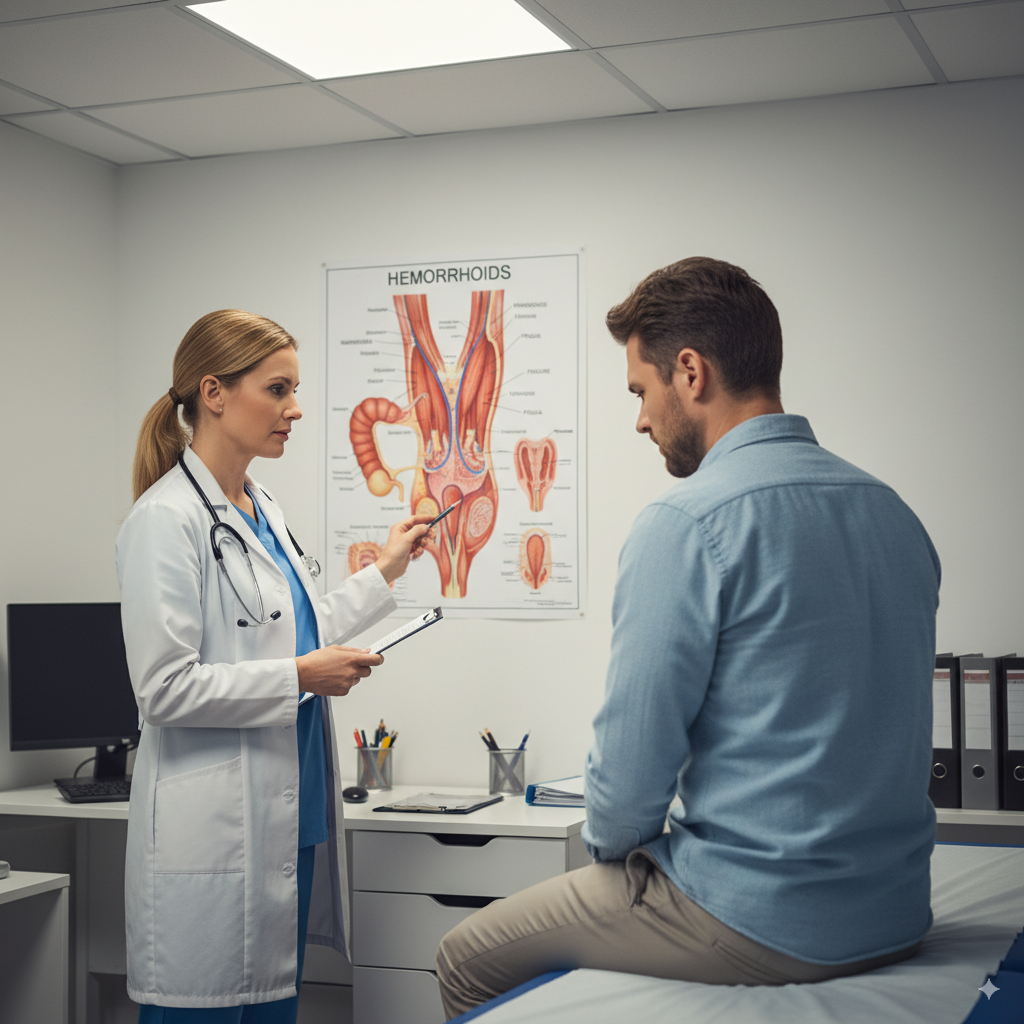
When managing chronic piles, the surgical solution is often life-changing. However, for many patients over 40, piles don’t come alone. They often coexist with High Blood Pressure (Hypertension) and Diabetes.
At Vithai Piles Hospital, Dr. Atul Patil emphasizes that while these conditions add complexity, they are not barriers to a permanent cure. The secret lies in a “Safety-First” approach where we manage your vitals as meticulously as we perform the surgery.
The “Safety Triad”: Why BP and Sugar Management is Non-Negotiable
For a healthy patient, piles surgery is straightforward. But for those with comorbidities, the body requires extra care to ensure a smooth recovery.
1. High Blood Pressure & The Risk of Bleeding
Hypertension puts constant pressure on the walls of your blood vessels. During surgery, a sudden spike in blood pressure can lead to increased bleeding. Furthermore, many BP patients are on blood thinners (anti-platelets).
- Dr. Patil’s Precaution: We coordinate with your cardiologist to “bridge” or adjust your blood thinners, ensuring your blood clots normally during surgery while keeping your heart protected.
2. Diabetes & The Challenge of Healing
High blood sugar levels can weaken the immune response and slow down tissue repair. For a diabetic patient, a traditional “open” surgery carries a higher risk of post-operative infection and delayed wound closure.
- The Solution: This is where Laser Piles Treatment shines. Because it involves no open wounds or stitches, the risk of infection is virtually eliminated, making it the safest choice for diabetic patients.
5 Essential Precautions for a Complication-Free Surgery
If you are a patient with BP or Diabetes, Dr. Atul Patil follows a strict protocol to ensure your safety:
I. Achieving the “Stability Window”
Surgery is safest when your numbers are stable. We typically look for:
- Blood Sugar: An HbA1c level preferably below 7.5% and stable fasting sugars.
- Blood Pressure: Consistent readings around 130/80 mmHg leading up to the procedure.
II. Pre-Anesthesia Checkup (PAC)
Before any procedure at Vithai Piles Hospital, our anesthesiology team conducts a thorough evaluation. We assess how your heart and kidneys—which can be affected by long-term BP and Diabetes—will handle the anesthesia.
III. The “No-Cut” Advantage (Laser Technology)
For patients with comorbidities, we prioritize Laser Proctology. Unlike traditional methods, laser energy seals the blood vessels as it treats the piles. For a diabetic patient, “no cuts” means “no infection risk.” For a BP patient, “no bleeding” means “no stress on the heart.”
IV. Specialized Medication Timing
Knowing when to take your diabetes or BP medication on the day of surgery is vital. Some medications need to be taken with a sip of water, while others (like Insulin) must be adjusted because you will be fasting. Dr. Patil provides a clear, written schedule for your morning-of-surgery meds.
V. Post-Op Fiber & Sugar Balance
After surgery, a high-fiber diet is mandatory to prevent constipation. However, many “fiber supplements” contain hidden sugars. We provide a customized diet plan that keeps your stools soft without causing a spike in your glucose levels.
Cardiac Clearance is Critical Before Piles Surgery
Dr. Praveen Pawal’s Safety-First Approach for High-Risk Patients in Pune
For many patients, piles surgery feels small and localized. But for those with heart disease, high blood pressure, breathlessness, or a history of stent/bypass surgery, it becomes a whole-body event. Your heart works harder during surgery — it does not “sit out.”
That’s why Dr. Praveen Pawal, Cardiologist in Baner, Pune, strongly emphasizes that cardiac evaluation before surgery is not optional — it is protective.
This is not about delaying treatment.
This is about preventing serious, life-threatening complications.
The Hidden Risk Most Patients Miss
Even minimally invasive piles surgery can trigger:
-
Stress response in the body
-
Sudden blood pressure changes
-
Heart rate fluctuations
-
Fluid shifts
-
Anesthesia impact on circulation
For a healthy heart, this is manageable.
For a vulnerable heart, this can be dangerous.
That’s where pre-surgical cardiac clearance becomes the safety line between smooth recovery and critical complications.
The Multi-Disciplinary Edge at Vithai Piles Hospital
Dr. Atul Patil believes in the Multi-Disciplinary Team (MDT) approach. We don’t just treat the piles; we treat the patient. By working closely with your existing physicians or our in-house specialists, we ensure that:
- Your heart is monitored throughout the procedure.
- Your sugar levels are checked pre-op, intra-op, and post-op.
- Your recovery is fast, painless, and—most importantly—safe.
The Takeaway
You don’t have to “just live with” the pain of piles because of your BP or Diabetes. With the right precautions and advanced laser technology, you can achieve a piles-free life without compromising your systemic health.
FAQ
- Is laser surgery safer than stapler surgery for diabetics? Both are advanced, but laser is often preferred for its “non-invasive” nature which is excellent for infection control.
- Will my hospital stay be longer? Generally, no. Most of our BP and diabetic patients are discharged within 24 hours, thanks to minimally invasive techniques.
- What if my BP rises due to anxiety? Our team is trained to manage “surgical anxiety” with mild, heart-safe sedatives to keep you calm and stable.
Are you suffering from piles and worried about your BP or Sugar?
Click here to book a safety-focused consultation with Dr. Atul Patil at Vithai Piles Hospital.